

Apartment Inspections Explained: What Gets Checked and Why
If you own or manage an apartment property, regular inspections can reveal problems before they become costly. They provide a clear view of your building’s systems, individual units, common areas, and safety conditions.
So, what does an apartment inspection entail? The answer depends on the inspection’s purpose and scope. A single-unit inspection is very different from a full property condition assessment covering a large multifamily community.
Property owners often have questions about who conducts inspections, how many units are checked, what inspectors look for, and what happens when issues are found. This apartment inspection guide explains what to expect, how to understand the findings, and how to prioritise the required work. It also explains where a contractor can help after the inspection.
What Does an Multifamily Apartment Inspection Cover
An apartment inspection is a physical review of selected property conditions, systems, and components. The inspection scope depends on the property, inspection type, and reason for the assessment. A broader multifamily inspection may review several areas across the property.
- Building exterior: Inspectors may review roofing, siding, exterior walls, drainage, walkways, and visible structural conditions.
- Major systems: The review may include plumbing, electrical, HVAC, and other major building systems.
- Individual units: Inspectors can examine fixtures, appliances, flooring, windows, doors, and visible signs of water damage.
- Common areas: Hallways, stairs, laundry rooms, mail areas, amenity spaces, and other shared areas may be reviewed.
- Life safety features: Depending on the inspection scope, inspectors may review visible safety equipment and emergency features.
- Accessibility features: Ramps, handrails, entrances, and other accessible features may be assessed where applicable.
The finished report may include photographs, descriptions, condition observations, and recommended actions. Not every inspection uses the same rating system or reporting format.
What Areas Are Checked During Multifamily Inspections
The inspection process normally moves through the property’s major physical components. The depth of each review depends on the inspection’s objectives.
Roof and Exterior
Inspectors look for visible signs of deterioration, damage, water intrusion, or drainage problems. They may also review exterior finishes, sidewalks, parking areas, and other site features.
Plumbing and Water Systems
Visible plumbing components may be checked for leaks, damage, corrosion, and general condition. Inspectors may also identify evidence of previous or ongoing water intrusion.
Electrical Systems
The inspection may include visible electrical panels, outlets, wiring, lighting, and other accessible components. More specialised electrical testing may require a separate professional.
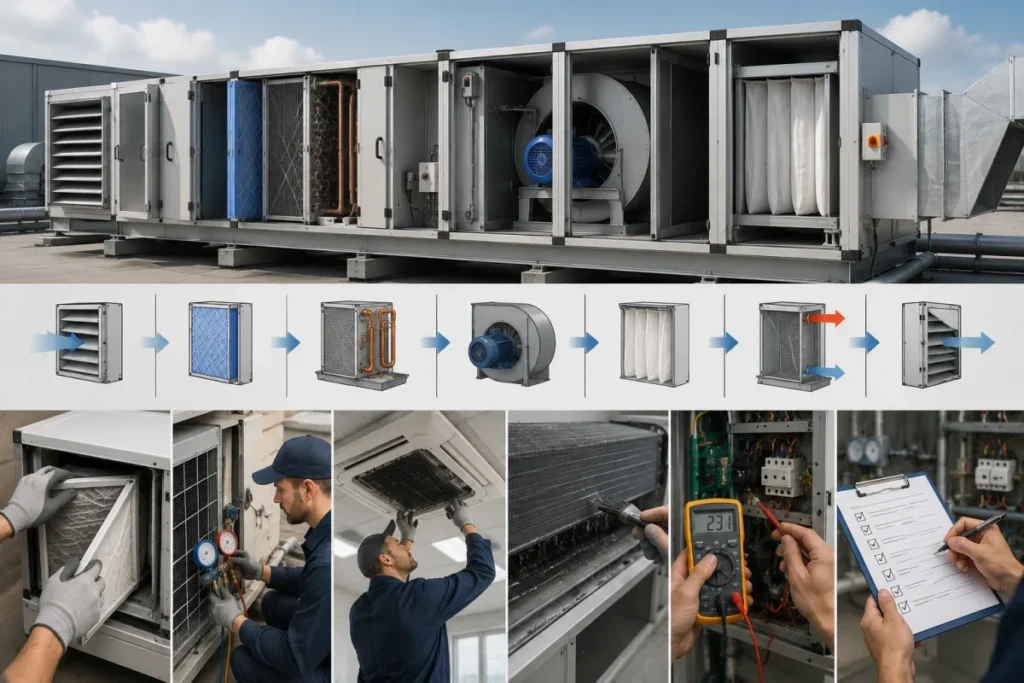
HVAC Systems
Heating and cooling equipment can be reviewed for visible condition, age, operation, and maintenance concerns. An inspection does not always provide the same level of analysis as specialised equipment testing.
Apartment Units
Inspectors may review kitchens, bathrooms, living areas, bedrooms, flooring, doors, windows, fixtures, and appliances. They may also document visible damage or signs of moisture, pests, or mold.
Common Areas
Shared spaces are important because they affect resident safety and property operations. Inspectors may review corridors, stairs, laundry areas, amenity spaces, entrances, and other accessible areas.
Life Safety Features
Depending on the inspection type, visible safety features may be reviewed. These can include smoke detectors, fire extinguishers, exit signage, emergency lighting, and sprinkler-related components.
Some fire and life-safety requirements are subject to local codes and separate testing requirements. Owners should confirm applicable requirements with the relevant authority or qualified professional.
Multi Unit Inspections vs Multi Family Inspections
The terms multi unit inspections and multi family inspection are often used to describe inspections of residential properties containing multiple units. However, the exact scope is not determined by the label alone.
A duplex, townhouse development, garden-style community, and high-rise property can all require different inspection approaches. The number of buildings, units, systems, and inspection objectives can significantly affect the process.
For example, a lender-ordered property assessment may have a different scope from a routine maintenance inspection. A unit turn inspection is narrower than a property-wide assessment.
The most important question is not which term is used. It is what the inspection covers, who requested it, and what decisions the report needs to support.
Common Types of Apartment Inspections
Property owners may encounter several inspection types during the ownership or management of a multifamily property. Each serves a different purpose.
Property Condition Assessment (PCA)
A property condition assessment (PCA) provides a structured review of a property’s physical condition. It is commonly associated with transactions, financing, or other forms of property evaluation. A PCA can document major building components and identify immediate or future repair needs. The precise scope varies according to the assignment and reporting requirements.
Capital Needs Assessment (CNA)
A capital needs assessment (CNA) focuses more heavily on future capital requirements. It can help identify major systems that may need replacement or significant investment. The findings can support long-term capital planning and budgeting. Owners may use this information when developing a broader capital improvement strategy.
Unit Turn Inspection
A unit turn inspection happens around the time a resident leaves and before the next resident occupies the unit. It focuses on the specific condition of that apartment.
The resulting punch list can identify work such as painting, flooring repairs, fixture replacement, cleaning, or other turnover requirements.
Move-In or Move-Out Inspection
A move-in or move-out inspection documents a unit’s condition at a particular point in the tenancy. It can create a record of existing conditions and newly observed damage. The exact documentation requirements can vary based on local law, lease terms, and property management practices.
Read: Can a Landlord Renovate While You’re Living There
How to Read an Apartment Inspection Report
Receiving the inspection report is only the beginning. Property owners must turn the findings into practical priorities, budgets, and work plans. Start by separating findings according to urgency, scope, and impact.

Immediate Issues
These findings may involve active damage, safety concerns, water intrusion, or conditions that require prompt attention. The appropriate response depends on the severity and applicable requirements.
Short-Term Repairs
These are issues that may not require immediate action but should be addressed during upcoming maintenance or renovation work. Grouping similar repairs can improve efficiency and planning.
Deferred Maintenance
Deferred maintenance refers to upkeep that was postponed. A minor issue can become more expensive when it remains unresolved. For example, an unaddressed roof leak can eventually contribute to more extensive water damage. The resulting repair may involve more materials, labour, and disruption.
Capital Improvements
A capital improvement generally involves a significant upgrade, replacement, betterment, restoration, or adaptation of property. The tax classification depends on the applicable rules and facts.
For rental property, the IRS generally distinguishes deductible repairs from improvements that must be capitalised. Improvements can include substantial replacements or upgrades to property. A contractor can help define the construction scope. A tax professional should determine the appropriate tax treatment.
How Inspection Findings Become a Capital Improvement Plan
An inspection identifies existing conditions. A capital improvement plan turns those findings into a longer-term strategy. Owners can organise major findings by priority, estimated cost, expected timing, and operational impact. This helps determine which projects require immediate attention and which can be scheduled later.
For example, an owner may prioritise an urgent plumbing issue first. A roof replacement could then be planned for the following budget cycle.
Maintaining detailed project records also matters. The IRS notes that qualifying improvements can increase a property’s basis, making proper documentation important for applicable properties.
Can You Inspect an Occupied Apartment Building
Yes, inspections can take place while residents occupy the property. However, access must be coordinated carefully. Property managers may need to provide residents with advance notice. Requirements can vary by state, local law, lease terms, and the inspection’s purpose.
A well-planned inspection should minimise disruption and organise access efficiently. Owners should also have a process for units that cannot be accessed during the initial inspection.
HAWK’s current project approach includes phased work and coordination around occupied multifamily communities. This can help reduce disruption when inspection findings lead into renovation work.
What Happens After an Apartment Inspection
Once the report is complete, property owners need to convert observations into action.
- Start by reviewing the findings with the appropriate property, maintenance, engineering, or construction professionals.
- Separate urgent issues from planned repairs and longer-term capital projects.
- Next, obtain clear scopes and realistic estimates for significant work. Grouping related projects can help reduce repeated mobilisation and disruption.
This is where a qualified renovation contractor can become particularly useful. HAWK Construction and Renovation works with multifamily property owners on capital improvements, deferred maintenance, and interior renovations after problems have been identified.
The objective is not simply to close inspection findings. It is to address underlying problems and improve the property’s long-term condition.
Why Choose an Experienced Multifamily Renovation Contractor
Inspection findings can involve multiple trades, buildings, units, and project phases. Choosing a contractor with multifamily experience can make the transition from report to construction more organised.
HAWK Construction and Renovation specialises in multifamily renovation, capital improvement, and deferred maintenance programs. Its work includes interior renovations, roofing, exterior improvements, plumbing, electrical, and other property upgrades. An experienced contractor can help property owners:
- Scope the work: Turn inspection findings into clearly defined construction requirements.
- Prioritise projects: Separate urgent repairs from planned capital improvements.
- Coordinate multiple trades: Manage related construction activities across buildings and units.
- Plan occupied renovations: Schedule work around residents and property operations.
- Manage larger programmes: Deliver improvements in phases across a multifamily community.
- Improve project visibility: Establish clearer timelines, budgets, and milestones.
HAWK’s current project portfolio includes capital improvement and deferred maintenance work across occupied multifamily communities.
Turn Inspection Findings Into a Clear Renovation Plan
An apartment inspection gives property owners valuable information about current conditions. The next step is deciding what needs to happen now and what can be planned for later.
HAWK Construction and Renovation can help turn inspection findings into defined repair, renovation, and capital improvement projects. From individual unit turns to larger property improvement programs, our team works with multifamily owners and managers to plan and execute the required work.
Ready to address your inspection findings? Contact HAWK Construction and Renovation to discuss your property’s renovation needs.
Frequently Asked Questions
What does an apartment inspection entail?
An apartment inspection can review units, common areas, building exteriors, major systems, and visible safety concerns. The exact scope depends on the property’s size, inspection type, and purpose.
What is included in a multifamily property inspection?
A multifamily inspection may cover roofing, exterior conditions, plumbing, electrical, HVAC, individual units, common areas, and other major components. The inspection agreement determines the actual scope.
What is a property condition assessment?
A property condition assessment is a structured evaluation of a property’s physical condition. It commonly documents major components, observed deficiencies, and potential repair or replacement needs.
What is a unit turn inspection?
A unit turn inspection reviews an apartment after a resident leaves. It identifies the work needed before the unit is ready for the next resident.
Do inspectors check every apartment?
Not always! The number of units inspected depends on the assignment and applicable requirements. Some inspections use a representative sample, while others may require broader or complete unit coverage.
How long does an apartment inspection take?
The duration depends on the number of units, buildings, systems, and inspection requirements. A single-unit inspection can be relatively brief, while a large property assessment can require substantially more time.
How often should a multifamily property be inspected?
There is no universal inspection schedule for every multifamily property. Frequency can depend on property type, ownership requirements, local rules, insurance, financing, maintenance needs, and specific safety requirements.
What happens if an inspection finds a major problem?
The finding should be reviewed and prioritised based on severity, safety, property impact, and applicable requirements. The owner can then obtain a repair or renovation scope and establish an appropriate timeline.
What is the difference between deferred maintenance and a capital improvement?
Deferred maintenance is work that was postponed and may have become more serious over time. A capital improvement generally involves a significant upgrade, replacement, restoration, or adaptation.
The tax treatment of an expenditure depends on the applicable rules and specific facts. The IRS generally requires qualifying improvements to be capitalised rather than deducted as ordinary repairs.
What is a capital needs assessment?
A capital needs assessment helps forecast future major repair and replacement needs. It can support long-term budgeting and capital improvement planning.
Can inspection findings affect financing?
They can. Lenders may consider property conditions when evaluating a transaction or financing request. Specific requirements vary by lender, property, and transaction.
Can inspection findings affect insurance?
They may. Insurers can consider property conditions when evaluating coverage and risk. Requirements vary by insurer, property type, and policy.
What documents should I keep after an inspection?
Keep the inspection report, photographs, contractor scopes, estimates, invoices, permits, and project records where applicable. Good records can support future maintenance, budgeting, and applicable tax reporting.
Should I get a contractor involved after an inspection?
A contractor can be useful when the report identifies repairs, renovations, deferred maintenance, or capital projects. They can translate findings into construction scopes, budgets, schedules, and work phases.
What should I do after receiving my inspection report?
Start by sorting findings according to urgency and project type. Address critical concerns promptly, price the remaining work, and incorporate larger projects into a long-term capital improvement plan. HAWK Construction and Renovation can help multifamily property owners turn inspection findings into actionable renovation and improvement projects.